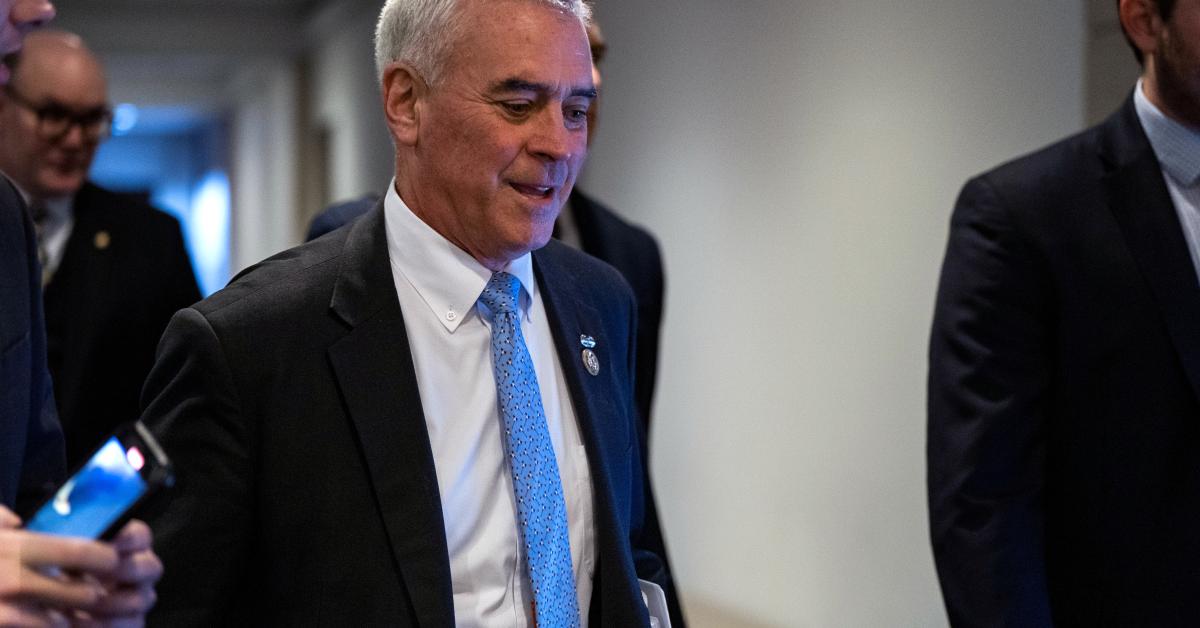
A senior public health official once trusted with shaping America’s pandemic response now faces federal charges tied to the suppression of early Covid-19 data. The indictment of Dr. David Relman, a former top advisor to Dr. Anthony Fauci at the National Institutes of Health (NIH), marks a pivotal moment in the unraveling of behind-the-scenes actions during the critical early months of the pandemic.
The case centers on allegations that Relman participated in efforts to conceal or downplay emerging evidence related to the lab-leak theory of SARS-CoV-2’s origin, while simultaneously influencing public messaging through coordinated email exchanges later deemed hidden or improperly archived. As a key voice within the National Institute of Allergy and Infectious Diseases (NIAID) advisory network, Relman’s role placed him at the intersection of science, policy, and media narrative—making the charges not just a legal matter, but a crisis of public trust.
The Indictment: What Exactly Was Charged?
Federal prosecutors allege that Dr. Relman violated the Federal Records Act by intentionally failing to preserve and produce government communications related to early discussions about the virus’s origin. Investigators uncovered a cache of over 800 emails—many retrieved through Freedom of Information Act (FOIA) litigation and forensic data recovery—showing a pattern of informal, off-channel discussions among high-level advisors that excluded official documentation protocols.
Relman is accused of:
- Using private email and messaging apps to discuss government-related matters
- Instructing colleagues to delete or avoid formal email chains on sensitive topics
- Influencing public health statements that dismissed the lab-leak hypothesis before thorough investigation
These actions, prosecutors argue, were part of a broader effort to maintain a unified narrative favoring the zoonotic origin theory, despite growing internal skepticism.
“This isn’t just about one scientist,” said a congressional aide briefed on the investigation. “It’s about whether we can trust the institutions meant to protect us when crisis hits.”
Who Is Dr. David Relman?
Dr. David Relman is a Stanford University professor of microbiology and immunology, and served as a prominent advisor to Fauci through multiple advisory boards, including the NIAID Council and the National Science Advisory Board for Biosecurity (NSABB). His expertise in emerging infectious diseases made him a sought-after voice during the pandemic’s early uncertainty.
But his credibility has been challenged in recent years. In 2021, Relman co-authored an opinion piece in Nature calling for a serious investigation into the possibility of a lab-origin for SARS-CoV-2—a position he now appears to have resisted internally at the time, according to newly disclosed messages.
Internal emails show Relman advising colleagues to “avoid amplifying fringe theories” even as scientific questions mounted. One March 2020 exchange with an NIAID communications officer states: “We should not give oxygen to the Wuhan lab idea. It plays into dangerous political narratives.” The message was sent via personal Gmail and not preserved in official records—exactly the kind of conduct under legal scrutiny.
Hidden Emails Reveal Coordinated Messaging Strategy
The discovery of hidden communications emerged from a lawsuit filed by the group Public Health and Medical Professionals for Transparency (PHMPT), which sued the NIH over records related to gain-of-function research and virus origin discussions.
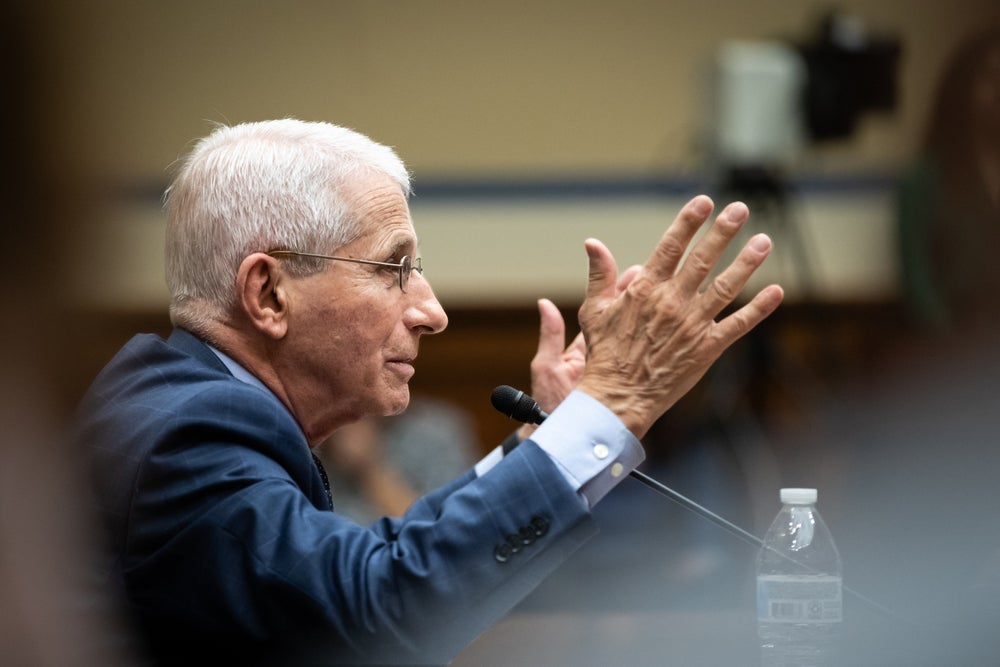
Recovered emails reveal a small group of advisors—including Relman, Fauci, and others—engaging in rapid-fire discussions about how to respond to media inquiries on the lab-leak hypothesis. Some exchanges show frustration with scientists like Dr. Alina Chan and Dr. Jesse Bloom, who were publicly advocating for a lab investigation.
One particularly notable thread from February 2020 shows Relman suggesting that public statements “should be pre-coordinated” to prevent “mixed messaging.” Another message recommends issuing a joint letter—later published in The Lancet—denouncing the lab-leak theory as “conspiracy thinking.” That letter, signed by several prominent scientists, played a major role in discrediting early calls for investigation.
Critics now allege the letter was less a product of scientific consensus and more a strategic public relations move.
“We were told the science was settled,” said one NIH whistleblower who requested anonymity. “But behind the scenes, the conversation was anything but settled.”
Why This Matters for Public Trust
The indictment goes beyond one man’s alleged misconduct. It strikes at the foundation of public health leadership: transparency during emergencies.
When government scientists operate through unofficial channels, the public loses access to the decision-making process. That opacity, especially during a global crisis, fuels distrust.
Consider these real-world consequences:
- Delayed investigations into the virus’s origin hindered pandemic preparedness reforms
- Misinformation thrived in the vacuum created by official dismissal of legitimate questions
- Public compliance with health measures eroded as people sensed a lack of honesty
A 2023 Pew Research study found only 37% of Americans believe public health agencies are transparent about risks. Cases like Relman’s reinforce that skepticism.
Moreover, the legal precedent is significant. While advisors have long used informal channels, the Federal Records Act is clear: any communication related to official duties must be preserved. Prosecutors argue Relman wasn’t just cutting corners—he was actively obstructing accountability.
The Lab-Leak Theory: From Fringe to Forensic Focus
One of the most controversial aspects of the case is how early warnings about a possible lab origin were treated.
In January and February 2020, several scientists noted unusual genomic features in SARS-CoV-2, including a furin cleavage site not seen in closely related coronaviruses. Some, like Dr. Richard Ebright, raised concerns about research at the Wuhan Institute of Virology involving genetic manipulation of bat coronaviruses.
Yet public health leaders, including those in Fauci’s orbit, consistently downplayed these concerns.
Internal emails show Relman expressing private curiosity—“It would be naive to rule it out,” he wrote in one message—but advocating public dismissal. That disconnect between private acknowledgment and public denial is central to the prosecution’s case.
Today, even former skeptics acknowledge the lab-leak theory is plausible. A 2024 report by the U.S. Energy Department assessed with “low confidence” that the virus likely originated from a lab accident. The FBI and CIA have also cited lab-leak as a viable scenario.
Had these discussions been public in 2020, the global response might have looked very different.
Institutional Accountability vs. Individual Scapegoating
Some experts warn that prosecuting a single advisor risks oversimplifying a systemic issue.
“Relman didn’t act alone,” said Dr. Jennifer Reich, a sociologist of science at the University of Colorado. “This was a culture of expedience, where rapid consensus was valued over transparency. Blaming one person ignores the institutional pressures at play.”
Indeed, the pandemic demanded fast decisions. Waiting for full data wasn’t always an option. But speed shouldn’t come at the cost of honesty.
Common mistakes in crisis communication include:

- Over-unifying messaging to avoid “confusing the public”
- Dismissing alternative hypotheses as “conspiracy theories”
- Relying on backchannel coordination instead of documented processes
These are not unique to Relman. They reflect broader patterns in how scientific institutions manage uncertainty—and public perception.
Still, the law draws a line at record destruction. And if proven, Relman’s actions may have crossed it.
What Happens Next?
Relman has pleaded not guilty. His legal team argues that the emails in question were personal reflections, not official records, and that no intent to obstruct justice existed.
The trial is expected to begin in late 2024. Key evidence will include:
- Metadata from recovered emails
- Testimony from FOIA requesters and NIH staff
- Forensic analysis of deleted messages
Depending on the outcome, the case could prompt reforms in how federal health agencies manage digital communications. Proposed legislation, including the Scientific Integrity in Public Health Act, would require all advisory discussions related to policy to be documented and archived.
Additionally, the Department of Health and Human Services (HHS) has launched an internal review of record-keeping practices across NIH and CDC divisions.
A Turning Point for Public Health Leadership
The indictment of a top Fauci advisor is more than a legal drama—it’s a reckoning.
For years, the public was told that the scientific process was self-correcting, transparent, and apolitical. But hidden emails and coordinated messaging strategies reveal a different reality: one where reputation, narrative control, and political sensitivity sometimes outweighed open inquiry.
That doesn’t mean the original public health guidance was wrong. Masking, distancing, and vaccines saved lives. But legitimacy requires accountability—even when it’s uncomfortable.
As citizens, we must demand better. Not perfection, but honesty. Not unanimity, but transparency. The science evolves when questions are allowed to surface, not silenced.
For public health leaders, the lesson is clear: your private words matter. Your channels of communication matter. And the public’s trust depends on what you preserve—not just what you publish.
Practical Takeaways for Stakeholders
- Scientists & Advisors: Use official channels for all policy-related discussions. Avoid private messaging apps for government business.
- Institutions: Implement mandatory training on record-keeping and scientific integrity.
- Journalists & Researchers: Continue aggressive FOIA requests and data audits.
- Citizens: Support policies that enforce transparency in federal science agencies.
The pandemic has passed, but its lessons remain. How we handle truth in crisis defines not just policy—but democracy itself.
FAQ
Who is Dr. David Relman? Dr. David Relman is a Stanford microbiologist and former advisor to Dr. Anthony Fauci on emerging infectious diseases and biosecurity.
What is he accused of? He’s indicted for allegedly violating the Federal Records Act by using private email to conduct official business and suppressing communications about Covid-19 origins.
Were the emails really “hidden”? Yes—many were sent via personal accounts or deleted, then recovered through FOIA lawsuits and forensic methods.
Does this prove a Covid cover-up? The indictment doesn’t prove a full cover-up but shows efforts to control narratives and avoid scrutiny on the virus’s origin.
Was the lab-leak theory dismissed too quickly? Yes—internal doubts existed as early as 2020, but public statements uniformly rejected the idea, sometimes denigrating those who raised it.
How could this affect future public health responses? It may lead to stricter rules on scientific transparency and record-keeping during emergencies.
Is Dr. Fauci charged? No. While his name appears in related emails, no charges have been filed against him.
FAQ
What should you look for in Ex-Fauci Top Advisor Indicted Over Alleged Covid Cover-Up? Focus on relevance, practical value, and how well the solution matches real user intent.
Is Ex-Fauci Top Advisor Indicted Over Alleged Covid Cover-Up suitable for beginners? That depends on the workflow, but a clear step-by-step approach usually makes it easier to start.
How do you compare options around Ex-Fauci Top Advisor Indicted Over Alleged Covid Cover-Up? Compare features, trust signals, limitations, pricing, and ease of implementation.
What mistakes should you avoid? Avoid generic choices, weak validation, and decisions based only on marketing claims.
What is the next best step? Shortlist the most relevant options, validate them quickly, and refine from real-world results.